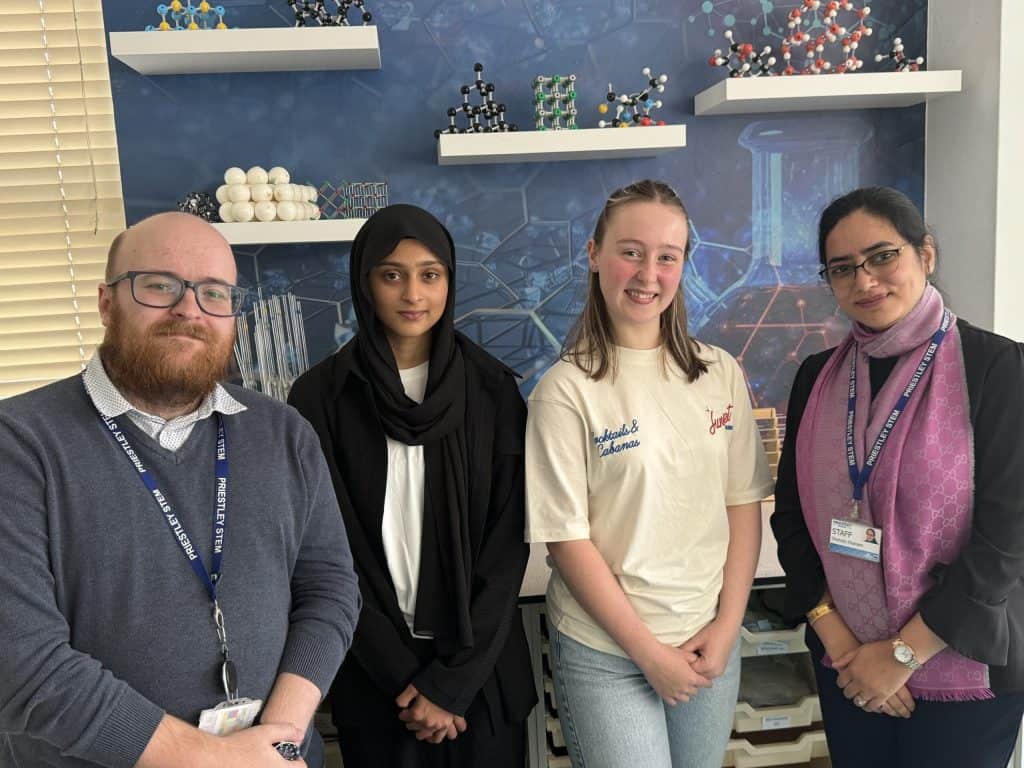
A Priestley College chemistry teacher has received national recognition for her outstanding contribution to chemistry education and her work creating opportunities in STEM for young people.
Shahida Khanam, who is from Widnes and who has taught at Priestley for 20 years, won the Royal Society of Chemistry’s (RSC) Nyholm Prize for Education. Previous recipients include several Nobel Prize laureates.
A University of Manchester chemistry graduate with more than 25 years’ teaching experience, Shahida is passionate about helping young people from all backgrounds recognise their potential, raise their aspirations and pursue opportunities in science and higher education.
“It is something you cannot achieve without the support of the whole college community, from the principal to your colleagues and the companies that provide opportunities for our students,” she said.
At Priestley, she combines high-quality teaching and individual support with a commitment to breaking down barriers that might otherwise prevent students from pursuing STEM careers.
Shahida’s work goes beyond the classroom, building relationships with local businesses, industry experts and former students to create opportunities and networks of support.
Her influence extends well beyond the students she teaches today. Through these partnerships, Shahida has created a community that helps young people access experiences and opportunities they may never have considered possible.
Many former students return to share their experiences and inspire the next generation, creating a lasting legacy that continues to benefit young people across Warrington.
The RSC recognised Shahida’s dedication and exceptional track record in supporting disadvantaged students into chemistry-related careers, as well as the significant impact she has made on young people and the wider community.
Dr Helen Pain, Chief Executive of the Royal Society of Chemistry, said: “Our winners empower the scientists of the future, strengthening the chemistry community for generations to come.”
On receiving the award, Shahida said: “I feel incredibly humbled, privileged and completely bowled over to receive this prize and to be recognised by my colleagues for my contribution to chemistry education.
“Seeing students engage with and enjoy chemistry is one of the most rewarding aspects of my work. To have that work recognised by colleagues makes the award all the more special.”